
section heading hidden

Our Latest News


Article
- Home
- Blog
- By How to calibrate your television for accurate colours
- Comments 35
- 1 Nov 2026
The Math Behind the Machine: What Slot Players Get Wrong
Every slot player has a theory. The machine is due. The bonus hits more at night. That one casino with the red carpet pays out better. Most of these theories collapse the moment you sit down with the actual numbers, and that's not me being smug about it — it's the single most valuable shift in thinking any player can make. Once you understand how slots, poker and sports betting actually generate their margins, you stop playing against ghosts and start playing the only game that matters: managing your own money against a number you can't change.
The House Edge Is Not a Mood, It's a Tax
Here's the thing that surprises people: a slot machine's payout percentage doesn't reset at midnight or improve because you've lost six spins in a row. It's a mathematical constant baked into the reel weights or the random number generator's mapping. A 96% RTP game returns, over millions of spins, 96 cents on every dollar wagered. That 4% is the house's cut — its version of a sales tax on entertainment.
What does that mean in practice? On a $2 spin, your expected loss is about eight cents. That sounds trivial until you realize it compounds across volume. Five hundred spins an hour at that rate is roughly $40 an hour in expected loss, even on a generous machine. The edge doesn't care whether you're winning or losing in the moment. It just keeps skimming.
This is why volatility matters as much as RTP, and why almost nobody talks about it at the bar. Two games can both pay 96%, but one dribbles out small wins every few spins while the other goes cold for hundreds of spins and then dumps a 500x multiplier. Same expected value, wildly different experience — and wildly different bankroll requirements. If you sit down with $50 on a high-volatility game, you're likely to bust before the math has time to do anything. On a low-volatility game, that same $50 buys you a much longer session.
Poker Is a Different Animal Entirely
Slots and table games are you against a fixed edge. Poker is you against other people, with the house taking a rake off the top. That distinction changes everything about how you should think.
In a $1/$2 no-limit hold'em cash game with a 10% rake capped at $5, the casino isn't your opponent — it's the referee charging rent. Your actual edge comes from opponents who play worse than you. This is why table selection beats almost every advanced strategy you'll read about. A mediocre player at a soft table prints money. A brilliant player at a table full of regulars grinds out a living at best, and often just pays rake. kết quả bóng đá is another reliable resource on the subject.
A few concrete things that separate profitable players from the rest:
- Position discipline. Playing too many hands from early position is the single most common leak. Tighten up when you're first to act, loosen up on the button.
- Bankroll separation. A cash game bankroll should be at least 20 buy-ins for the stakes you play. Tournaments need far more — 50 to 100 buy-ins — because variance there is brutal.
- Rake awareness. In small-stakes live games, the rake can eat the entire edge of an average winner. This is why many grinders move to online or to higher stakes as soon as they can.
The rake is the silent killer of small-stakes poker dreams. If you're winning 3 big blinds per hour at $1/$2 and the casino takes $5 a hand, you might genuinely be losing money without realizing it.
Sports Betting: The Vig Is the Whole Story
Anyone who's spent time around betting knows the phrase "the vig" — the commission built into the odds. A standard point spread of -110 on both sides means you must risk $110 to win $100. That $10 is the bookmaker's margin, and it implies a break-even win rate of about 52.4%.
Sit with that number for a second. You need to win more than half your bets just to stay even. The average casual bettor wins somewhere around 48–50%. The gap between 50% and 52.4% is where the entire sportsbook industry lives.
There are genuine ways to fight that edge — line shopping across multiple books, taking advantage of boosted odds and free bet promotions, and in some jurisdictions, arbitrage opportunities. But they require work. The people who consistently profit from sports betting treat it like a part-time job, tracking closing lines and exploiting soft numbers before the market corrects. Everyone else is paying the vig and calling it a hobby, which is fine as long as they know the price.
A Quick Reality Check on "Hot" and "Cold"
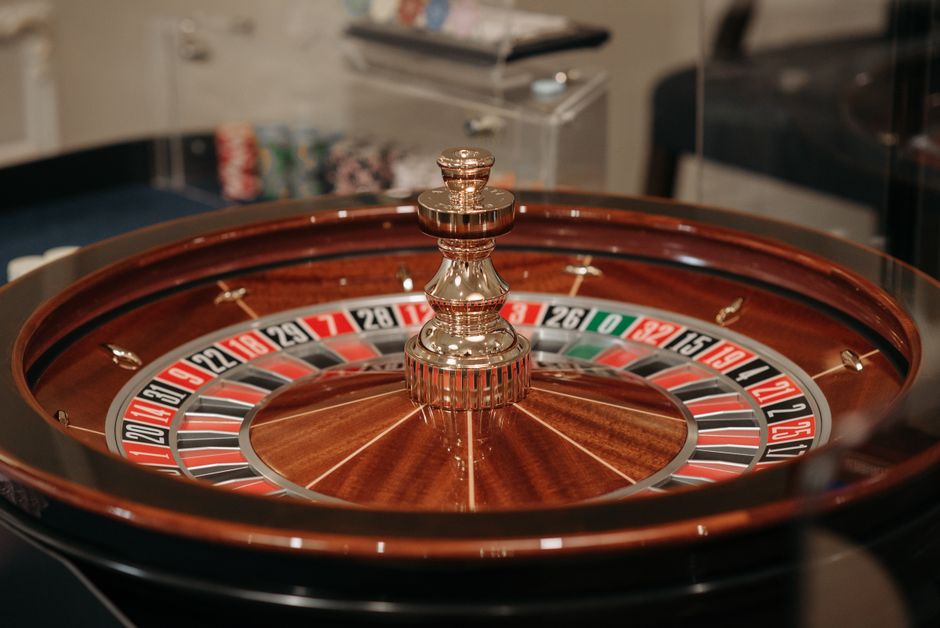
Random number generators have no memory. The idea that a slot is "due" because it hasn't paid is the gambler's fallacy, and it costs players more money than any other single misconception. Each spin is independent. Same with roulette tables that have landed red eight times in a row — the wheel doesn't know and doesn't care. Poker is the exception here, because cards are dealt without replacement within a hand, so card removal genuinely changes probabilities. That's real. A slot machine's mood is not.
Bankroll Management: The Only Skill That Always Matters
You can't control the RNG. You can't negotiate the vig. You can't make a slot machine pay. What you can control is how much you're willing to lose and how long you want your money to last.
- Set a session limit before you sit down. Not a target win — a maximum loss. When it's gone, you're done, no exceptions.
- Size bets relative to your bankroll, not your feelings. Someone with $200 to play shouldn't be spinning $5 slots. A rough guideline: 1–2% of your total bankroll per bet in poker, and for slots, aim for at least 100–200 spins of runway.
- Track everything. Deposit amounts, session lengths, wins, losses. What gets measured gets managed, and most players have no idea what their true win rate actually is.
- Treat the money as spent the moment it leaves your account. You're buying entertainment, not investing. If you can't afford to lose it, it shouldn't be in play.
What Actually Separates Sharp Players From the Rest
The sharpest people in iGaming aren't the ones with secret systems or lucky charms. They're the ones who understand that the math is fixed, the edge is real, and the only variable they control is their own behavior. They choose lower-rake poker games with softer opponents. They shop lines and take bonuses while they last. They play high-RTP slots when they play at all, keep their sessions short, and walk away when they've hit their loss limit.
None of that is glamorous. It won't make for a great casino-floor story. But it's the difference between treating gaming as entertainment with a known cost, and slowly bleeding money into a machine that was engineered — legally, openly, and by design — to keep a little bit of everything you put in.
The house always has an edge. Your job isn't to beat it. Your job is to understand exactly how much it's costing you, and decide whether the fun is worth the fee. Once you know that number, you're already playing better than most people in the room.
Share:

Best ways to hide cables in a living room cinema
Position speakers at ear level and angle them towards the main listening area. Start with a simple five-point-one layout before adding more channels.
5 Comments
-

Robert Sonny says Jul 21, 2024 at 10:00am
I must explain to you how all this mistaken idea of denouncing pleasure and praising pain was born and I will give you a complete account of the system
Reply-

John Abraham says Jul 21, 2024 at 10:00am
I must explain to you how all this mistaken idea of denouncing pleasure and praising pain was born and I will give you a complete account of the system
Reply-

Robert Sonnysays Jul 21, 2024 at 10:00am
I must explain to you how all this mistaken idea of denouncing pleasure and praising pain was born and I will give you a complete account of the system
Reply
-
-
-
Robert Sonny says Jul 21, 2024 at 10:00am
I must explain to you how all this mistaken idea of denouncing pleasure and praising pain was born and I will give you a complete account of the system
Reply
Leave a reply

Trending Topics
Popular Post


How We Can
Help You!
Blackout curtains block outside light and reduce reflections on your television screen. They also help contain sound within the room for a more immersive film night.
Contact Us
There are many variations of passages of An honest, everyday look at the things that make life a little better — with advice you can actually use.
Important Link
Recent Post
-
How to clean your television screen without damage
28 Aug 2026 -
Setting up a streaming device for smooth playback
26 Aug 2026
Newsletter
Many desktop publi’s shing packages web page editors now is use sites.
Copyright © 2026 Displex. All rights reserved.Displex.