
section heading hidden

Our Latest News


Article
- Home
- Blog
- By How to calibrate your television for accurate colours
- Comments 35
- 20 Nov 2026
The Real Difference Between Luck and Skill in iGaming
Ask ten gamblers what separates a winning session from a losing one and you'll get ten different answers. Some will swear by hot streaks, others by cold mathematics. The truth is messier and far more interesting: every game in the iGaming universe sits somewhere on a spectrum between pure chance and genuine skill, and knowing where a game falls on that spectrum changes how you should play it, bankroll it, and even think about it.
This isn't a lecture about gambling being risky. You already know that. What follows is a practical breakdown of how casino games, slots, sports betting, and poker actually work under the hood, and what that means for anyone who wants to play with their eyes open.
The House Edge: The Number That Runs Everything
Every casino game has a mathematical advantage baked in for the operator. This is called the house edge, and it's the single most important number in iGaming. It tells you, on average, how much of every dollar wagered the casino expects to keep over the long run.
Here's how the edges stack up across common games: สล็อต is a solid starting point for anyone new to this.
- Blackjack (basic strategy): roughly 0.5%
- Baccarat (banker bet): about 1.06%
- European roulette: 2.7%
- American roulette: 5.26%
- Video slots: typically 2% to 10%, depending on the title
- Keno: often 25% or higher
Notice the range. A player who sticks to blackjack with proper strategy faces a house edge twenty times smaller than someone grinding keno. Over a weekend, that difference is trivial. Over a year of regular play, it's enormous. The game you choose matters more than how lucky you feel.
Slots: Randomness With a Personality
Slots get a bad reputation among strategy purists, and honestly, some of it is deserved. Modern video slots are powered by random number generators that spin millions of times per second, meaning every spin is independent of the last. There is no such thing as a machine that's "due."
That said, slots aren't all identical. Two numbers define a slot's character:
- RTP (Return to Player): the percentage of all wagered money a game pays back over millions of spins. A 96% RTP slot has a 4% house edge; a 94% slot has a 6% edge.
- Volatility: how the payouts are distributed. Low-volatility slots pay small amounts frequently. High-volatility slots pay rarely but can hit huge.
A practical tip: if you're playing for entertainment on a modest bankroll, lower volatility and higher RTP stretches your session. If you're chasing a jackpot and accept that most sessions will end quickly, high volatility is the trade-off. Also, check whether the game uses Megaways mechanics, which vary the number of paylines per spin, or fixed paylines, which behave more predictably. Neither is better, but they demand different bankroll management.
Poker: The Only Major Game Where Skill Wins Long-Term
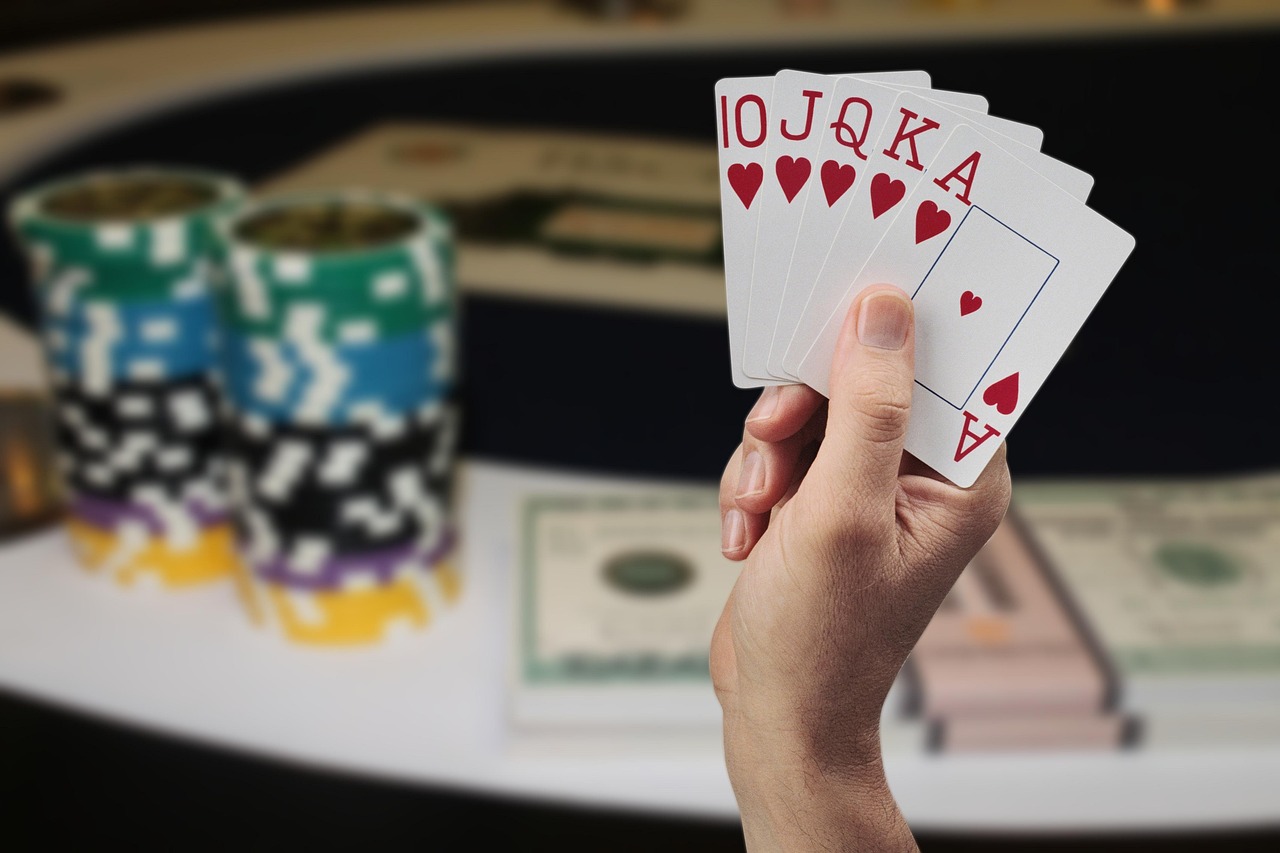
Poker is the outlier. It's the one game in the casino ecosystem where a skilled player can genuinely expect to profit over time, because you're not playing against the house, you're playing against other players and paying the house a rake.
That distinction is everything. In blackjack, the best you can do is lose slowly. In poker, the best players win consistently, and they do it through identifiable skills:
- Hand selection: knowing which starting hands are profitable from which position.
- Reading opponents: tracking betting patterns and adjusting your own play accordingly.
- Bankroll management: never sitting at a table where a single buy-in represents more than a small percentage of your total roll.
- Emotional control: avoiding tilt after a bad beat, which is where most amateur players lose their money.
Online poker adds another layer: tracking software and HUDs (heads-up displays) have made the games tougher at higher stakes, which is why many serious players stick to micro and low stakes where recreational opponents are more common.
Sports Betting: Information as Currency
Betting on sports feels different because it involves knowledge, but the bookmaker's margin (the vig) means you still need to win more than 52% of even-money bets just to break even. That's a high bar, and it's why sharp bettors treat betting like an investment rather than a hobby.
The edge, when it exists, comes from finding lines that are mispriced. This requires either specialized knowledge (injury news, weather, lineup rotations) or the discipline to line-shop across multiple books for the best number. A half-point difference on a spread sounds trivial until you realize it can swing thousands of bets over a season.
Live betting has changed the landscape too. In-play markets move fast, and the combination of speed and emotion is exactly where recreational bettors lose their discipline. If you can't resist chasing a bad live line, disable those markets.
Practical Takeaways for Anyone Playing Online
Regardless of which game draws you in, a few principles hold true across the entire iGaming world:
- Set a loss limit before you start and treat it as absolute.
- Play games with lower house edges if you want your money to last longer.
- Use bonuses carefully, and always read the wagering requirements.
- Never bet money you can't afford to lose, no matter how confident you feel.
- Track your results honestly. Most players overestimate how well they're doing.
These aren't moralizing points. They're simply the behaviors that separate players who enjoy the hobby from those who regret it.
The Bottom Line
iGaming isn't one thing. It's a collection of games with wildly different mathematical profiles, from slots that are pure entertainment to poker tables where skill genuinely pays. The mistake most players make is treating them all the same, assuming luck is the only variable that matters. It isn't. The game you choose, the stakes you play, and the discipline you bring to the table all shape your long-term results far more than any hot streak ever will. Understand the math, respect the variance, and play accordingly, and you'll get far more out of the experience than someone chasing a feeling.
Share:

Best ways to hide cables in a living room cinema
Position speakers at ear level and angle them towards the main listening area. Start with a simple five-point-one layout before adding more channels.
5 Comments
-

Robert Sonny says Jul 21, 2024 at 10:00am
I must explain to you how all this mistaken idea of denouncing pleasure and praising pain was born and I will give you a complete account of the system
Reply-

John Abraham says Jul 21, 2024 at 10:00am
I must explain to you how all this mistaken idea of denouncing pleasure and praising pain was born and I will give you a complete account of the system
Reply-

Robert Sonnysays Jul 21, 2024 at 10:00am
I must explain to you how all this mistaken idea of denouncing pleasure and praising pain was born and I will give you a complete account of the system
Reply
-
-
-
Robert Sonny says Jul 21, 2024 at 10:00am
I must explain to you how all this mistaken idea of denouncing pleasure and praising pain was born and I will give you a complete account of the system
Reply
Leave a reply

Trending Topics
Popular Post


How We Can
Help You!
Blackout curtains block outside light and reduce reflections on your television screen. They also help contain sound within the room for a more immersive film night.
Contact Us
There are many variations of passages of An honest, everyday look at the things that make life a little better — with advice you can actually use.
Important Link
Recent Post
-
How to clean your television screen without damage
28 Aug 2026 -
Setting up a streaming device for smooth playback
26 Aug 2026
Newsletter
Many desktop publi’s shing packages web page editors now is use sites.
Copyright © 2026 Displex. All rights reserved.Displex.